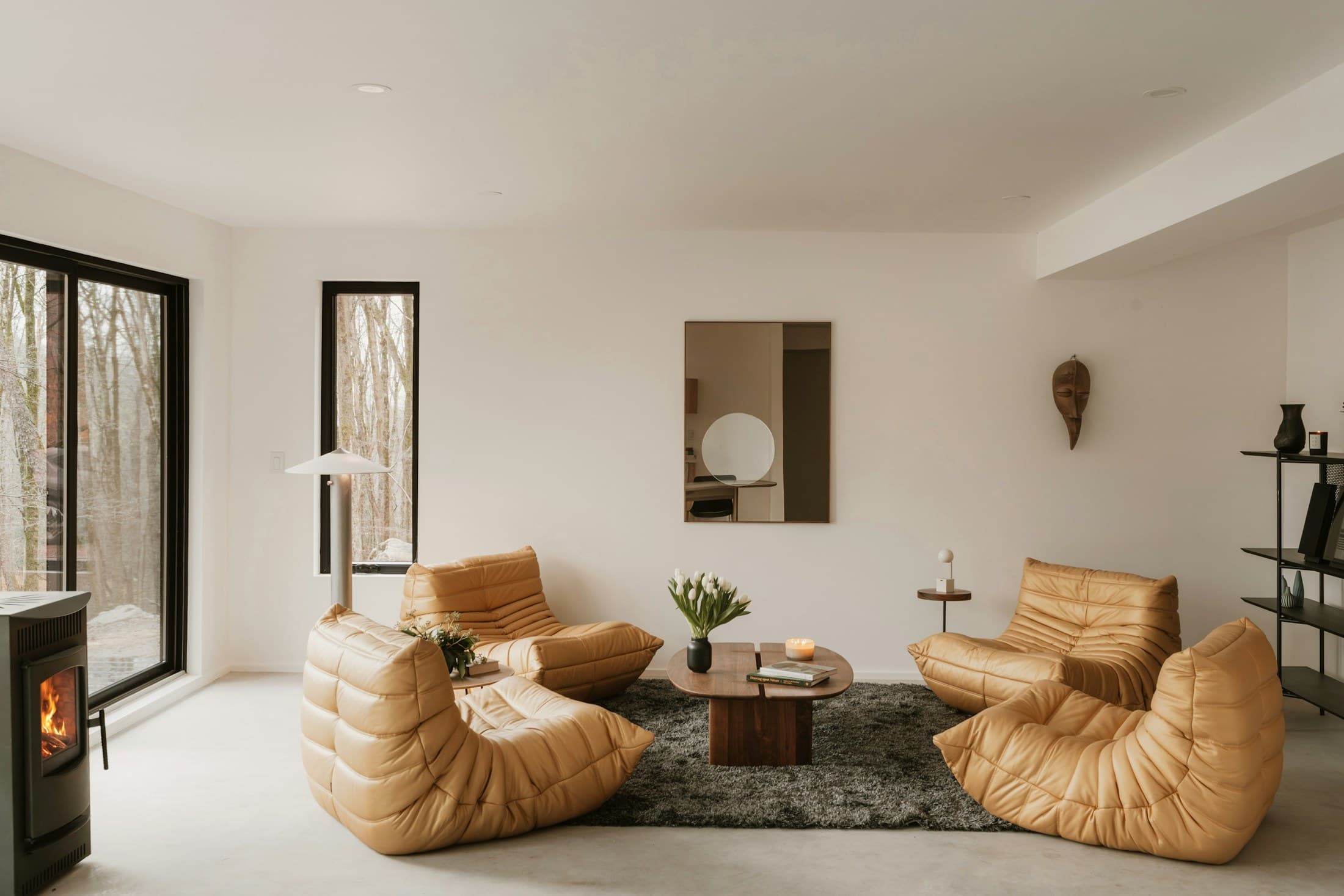
Light makes a wall legible. A narrow beam reveals the grain of timber; a broad wash softens its edges. The same room can feel expansive in the morning and intimate toward evening without a single object moving.
That change is worth designing for. Rather than treating a window as a source of maximum brightness, we can consider the direction, duration and quality of the light it admits.
Start with orientation
Different sites call for different responses. A deep reveal can filter direct sun. An opening above eye level can carry daylight further into a room while protecting privacy. A courtyard can introduce both light and a visible measure of the weather.
The right choice depends on climate, surroundings and how a room will be used. More glazing is not automatically more comfortable, especially where heat gain and glare are already concerns.
Leave room for shadow
Shadow is not simply a problem to remove. It gives a bright surface depth and provides a place for the eye to rest. A covered threshold can make the space beyond it feel more open.
After dark, a few carefully placed sources of light can support those same relationships. Lighting a wall, a work surface or a place to sit often creates more useful atmosphere than trying to illuminate every corner equally.